Case study
A Practice Management System, Built Solo
Five years inside a dental clinic teaches you what the software gets wrong. Vuedent is my answer: multi-tenant practice management where patient records, imaging, scheduling, and billing live in one system built around how a clinic actually moves through a day.
295
commits over thirteen months
AES-256
GCM encryption at rest
Day 1
multi-tenant from the first commit
Every
PHI read hits the audit trail
Why Build It
Clinic software tends to be either an enterprise system priced for hospitals or a booking calendar wearing a lab coat. What sits between them is a practice that needs patient records, clinical imaging, a room-aware schedule, and billing — without an IT department to hold it together. I had watched that gap from the inside for half a decade.
The Product
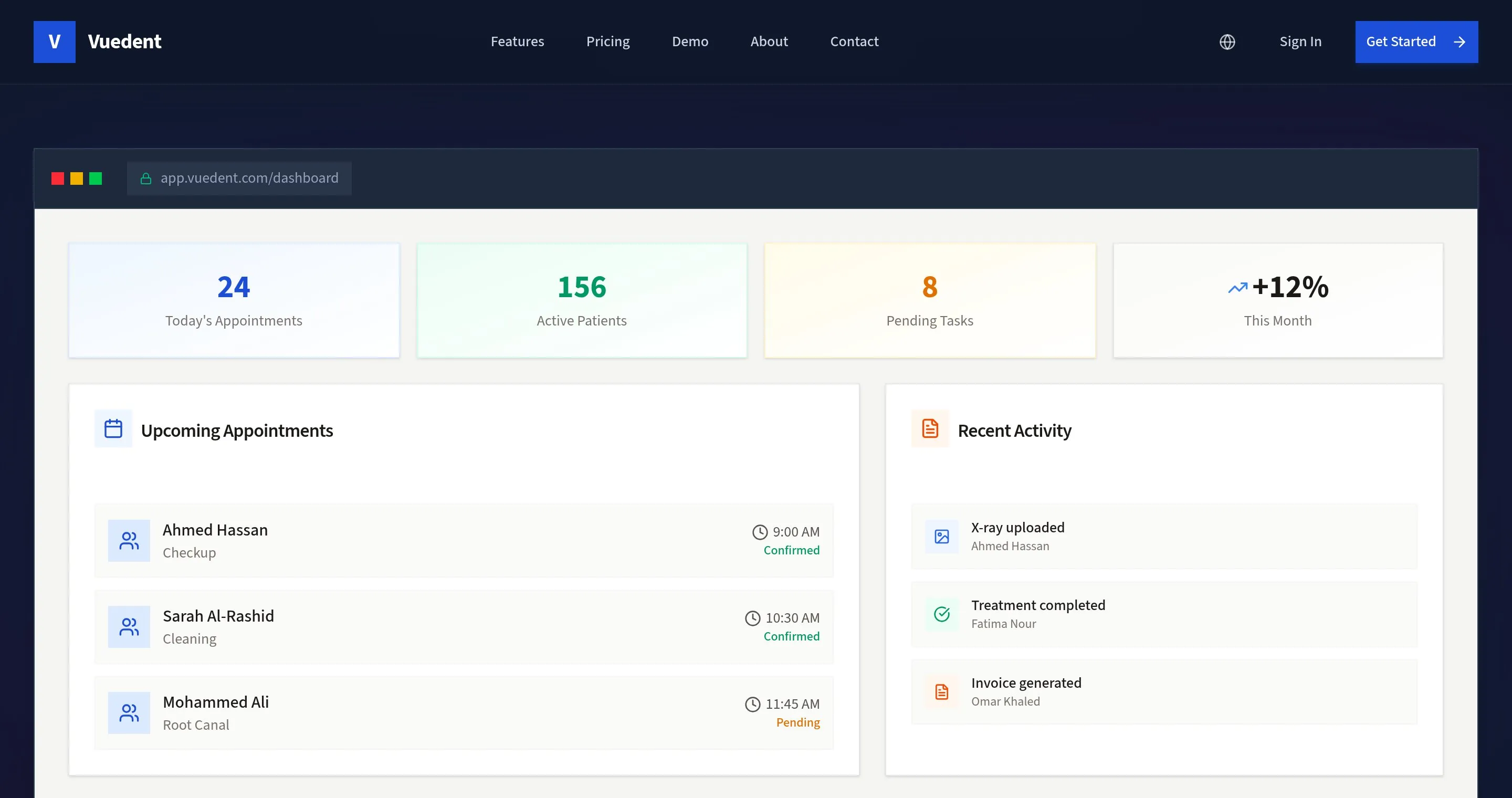
Patient records with full clinical history, image tagging by tooth region so a photograph attaches to the specific site it documents, scheduling that understands rooms and not just time slots, PDF reporting, and subscription billing. Multi-tenant from the first commit, because a practice management system that cannot isolate two clinics is a demo, not a product.
Security as Architecture
Patient health data sets the constraints before anything else is decided. Records are encrypted at rest with AES-256-GCM, every read of protected health information writes to an audit trail, and tenant isolation is enforced at the data layer rather than trusted to application code. These decisions are structural — they cannot be added to a system that was not shaped around them.
Where It Stands
The product site is live at vuedent.com with an interactive demo, and the system behind it is 295 commits over thirteen months of solo work. Underneath, two migrations are still in motion — the data layer moving to a lighter ORM, billing moving to a new merchant of record. Both are the kind of change that is cheap now and expensive later.